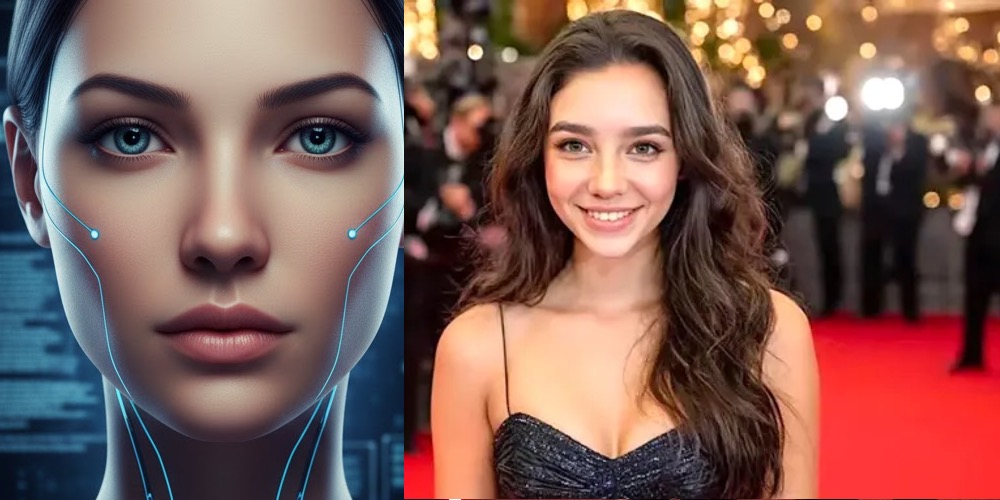
A photorealistic digital character named “Tilly Norwood” has become a flashpoint in Hollywood, fueling a contentious debate over the accelerating integration of artificial intelligence (AI) into the film and television industry. Trending as a breakout search query, public interest centers on verifying her identity and origin, with key phrases like “is tilly norwood a real person” spiking in search traffic.
The Character: AI-Generated IP
Tilly Norwood is not a human actor. She is a character created using generative artificial intelligence by Xicoia, the AI division of the UK-based production company Particle6 Group.
- Creator: Dutch actress and producer Eline Van der Velden, who founded Particle6, unveiled the character in September 2025 at the Zurich Film Festival.
- Purpose: Xicoia has positioned Norwood as a “synthetic” actor, with Van der Velden claiming the creation is intended to be a new form of digital celebrity IP that could cut production costs. Particle6 has claimed that using Norwood could reduce certain production costs by up to 90%.
- Public Debut: Norwood’s first project was an AI-generated comedy sketch titled AI Commissioner.
Industry Reaction and Union Opposition
Norwood’s introduction has been met with immediate and vocal criticism from Hollywood actors and the major performers’ union.
- SAG-AFTRA Statement: The Screen Actors Guild–American Federation of Television and Radio Artists (SAG-AFTRA) publicly condemned the character. In a statement, the union asserted that “Tilly Norwood is not an actor, it’s a character generated by a computer program that was trained on the work of countless professional performers — without permission or compensation.” The union also stated that the character “creates the problem of using stolen performances to put actors out of work.”
- Actor Backlash: Several established actors have expressed outrage, with some openly questioning the ethical implications of creating photorealistic digital performers, especially following the 2023 WGA and SAG-AFTRA strikes where AI protections were a central issue.
- Talent Agency Response: While the creators initially claimed that talent agencies were interested in representing Norwood, major agencies like The Gersh Agency and WME have publicly stated they would not sign the digital character.
- Creator’s Stance: Eline Van der Velden has defended the creation, stating that Norwood is a piece of art and a “new paintbrush” intended to remain within an “AI genre.” She has also assured the industry that Norwood is not meant to replace human actors, claiming her company has turned down roles in traditional film and television.
The controversy surrounding Tilly Norwood underscores the ongoing tension between technological advancement in media production and the livelihood of human creatives. The character is viewed by many in the entertainment industry as a direct embodiment of the AI replacement threat that was a core concern during recent labor negotiations.
Also read: Country Star Jon Pardi Headlines Big 12 Championship Halftime Show
❓FAQ on Tilly Norwood
Following the controversy surrounding her introduction, the AI-generated character “Tilly Norwood” remains a highly searched topic. The following is a breakdown of verified facts addressing the most common questions from the public and industry observers.
Identity and Creation
| Question | Verified Answer |
| Is Tilly Norwood a real person or a human actress? | No. Tilly Norwood is a completely computer-generated, photorealistic digital character. She is an AI-generated actress, not a human being. |
| Who created Tilly Norwood? | She was created by Eline Van der Velden, a Dutch actress and producer who is the founder and CEO of the AI production company Particle6 Group and its AI talent studio, Xicoia. |
| Why was she created? | Her creator, Eline Van der Velden, stated the character was made as an “act of imagination” and a “new paintbrush” to explore the possibilities of AI in filmmaking. The company also claimed that using a synthetic performer like Norwood could reduce production costs by up to 90% by eliminating logistics like travel, accommodation, and union overtime. |
| What AI tools were used? | Particle6’s Xicoia division used a proprietary “DeepFame engine” and a combination of up to ten different AI programs to generate her face, motion, facial animation, and voice synthesis. |
Industry & Labor Response
| Question | Verified Answer |
| What is SAG-AFTRA’s stance on Tilly Norwood? | The Screen Actors Guild–American Federation of Television and Radio Artists (SAG-AFTRA) condemned the creation. The union stated, “To be clear, ‘Tilly Norwood’ is not an actor, it’s a character generated by a computer program that was trained on the work of countless professional performers — without permission or compensation.” |
| Did any talent agencies sign her? | No. While her creators initially claimed that several talent agencies were interested in signing her, major agencies, including The Gersh Agency and WME, publicly announced that they would not represent the AI character. |
| Has she been cast in any major films or TV shows? | No. As of late 2025, Tilly Norwood’s only appearance is in a self-produced comedy sketch titled AI Commissioner. Her creator has since stated that the company has turned down roles in the traditional film and TV industry. |
| What is the central controversy? | The controversy centers on the ethics of using AI-generated performers that may have been trained on human actors’ data without their consent or compensation, and the direct threat this poses to the livelihoods and negotiating power of human actors in Hollywood. |
Legal and Creative Status
| Question | Verified Answer |
| Does Tilly Norwood have intellectual property (IP) protection? | The legal status of an AI-generated performer’s IP is a subject of ongoing debate. Experts note that issues regarding copyright, trademark, and defamation become complex when the “performer” is a malleable digital asset with no legal personhood or rights. |
| Is the use of “she” or “her” accurate? | SAG-AFTRA and many industry critics have refused to use gendered pronouns for Norwood, referring to “it” or “the character generated by a computer program.” This is a strategic move to define her as a “production tool” or “software” rather than a “talent” under union contracts, which has significant implications for regulation. |