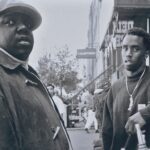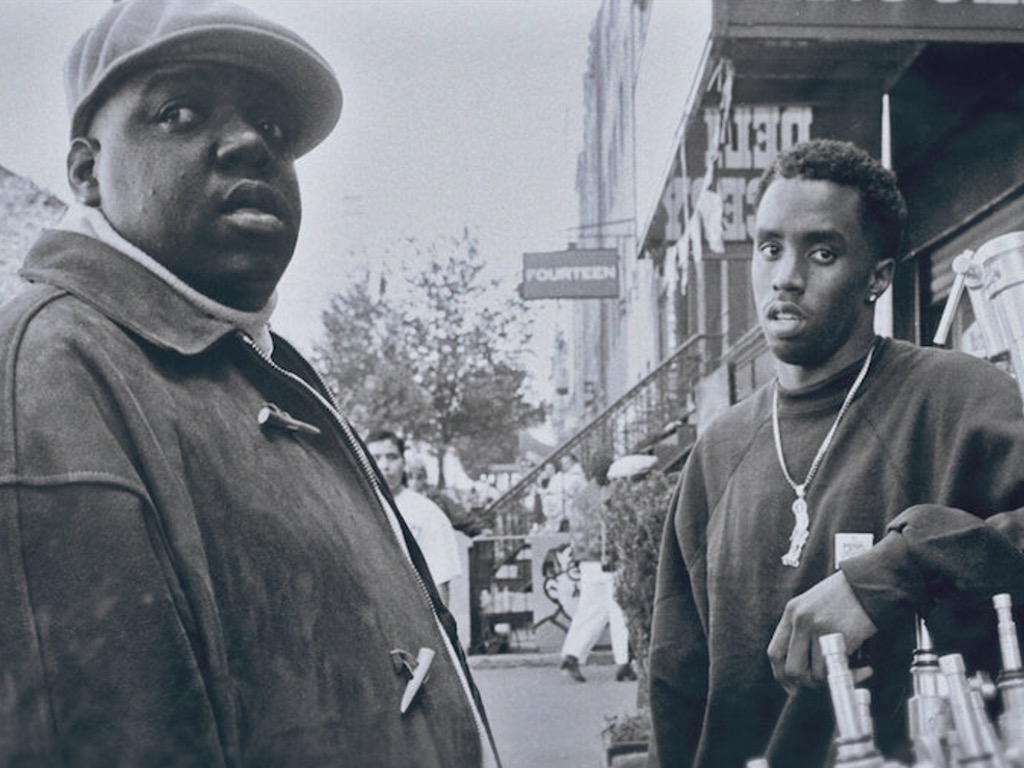
A new four-part docuseries Sean Combs: The Reckoning — produced by rapper-turned-executive producer 50 Cent in collaboration with director Alexandria Stapleton — is drawing renewed attention to the 1990s East-Coast–West-Coast rap rivalries and the long-unresolved murders of rap icons, including Tupac Shakur.
What the doc reveals
- The second episode of the series revisits the murders of Tupac and The Notorious B.I.G., presenting behind-the-scenes testimony from former associates of Combs and executives connected to the era.
- Among those interviewed is former Bad Boy Entertainment co-founder Kirk Burrowes, who in the documentary reveals contemporaneous journal entries and claims that Combs harbored jealousy toward the friendship between Tupac and Biggie — animosity he suggests helped fuel the East–West rivalry.
- The docuseries alleges that tensions intentionally inflamed by record-label executives escalated into a broader gang-style conflict involving rival groups, and posits that the violence led to the tragic, still-unsolved deaths of both Tupac and Biggie.
Background: The context of the feud
Tupac and Biggie’s deaths have remained among the most notorious unsolved murders in hip-hop history. Previous documentaries such as Biggie & Tupac (2002) explored rival theories — often pointing at Suge Knight and his label Death Row Records — but drew criticism for speculative evidence and lack of conclusive proof.
Meanwhile, the 2003 documentary Tupac: Resurrection charted Tupac’s life and legacy without claiming to solve the murder.
Now, 50 Cent’s involvement — given his long-standing personal and professional feud with Diddy — gives this new entry in the record a heightened significance, especially as it draws on witness testimony and archival materials previously unseen in public.
Reactions and legal context
The docuseries has sparked immediate controversy. Combs and his legal team denounced it as a “shameful hit piece,” claiming it relies on unauthorized footage and defamatory narrative.
Combs’s mother publicly refuted a specific allegation — featured in the documentary — that her son once physically assaulted her following a tragic 1991 event, calling the claim “patently false.”
What’s next for the conversation
With streaming now underway on Netflix, the documentary is likely to reignite public and media interest in the unresolved murders of Tupac and Biggie, and in the role record-label politics may have played. The inclusion of detailed insider accounts — from former Bad Boy insiders to law-enforcement members — gives the series a potentially far-reaching impact in shaping how the era is remembered.
For journalists and analysts, the series may serve as a new reference point — not only in terms of historical narrative, but also for evolving cultural conversations on accountability, power, and legacy in hip-hop.